
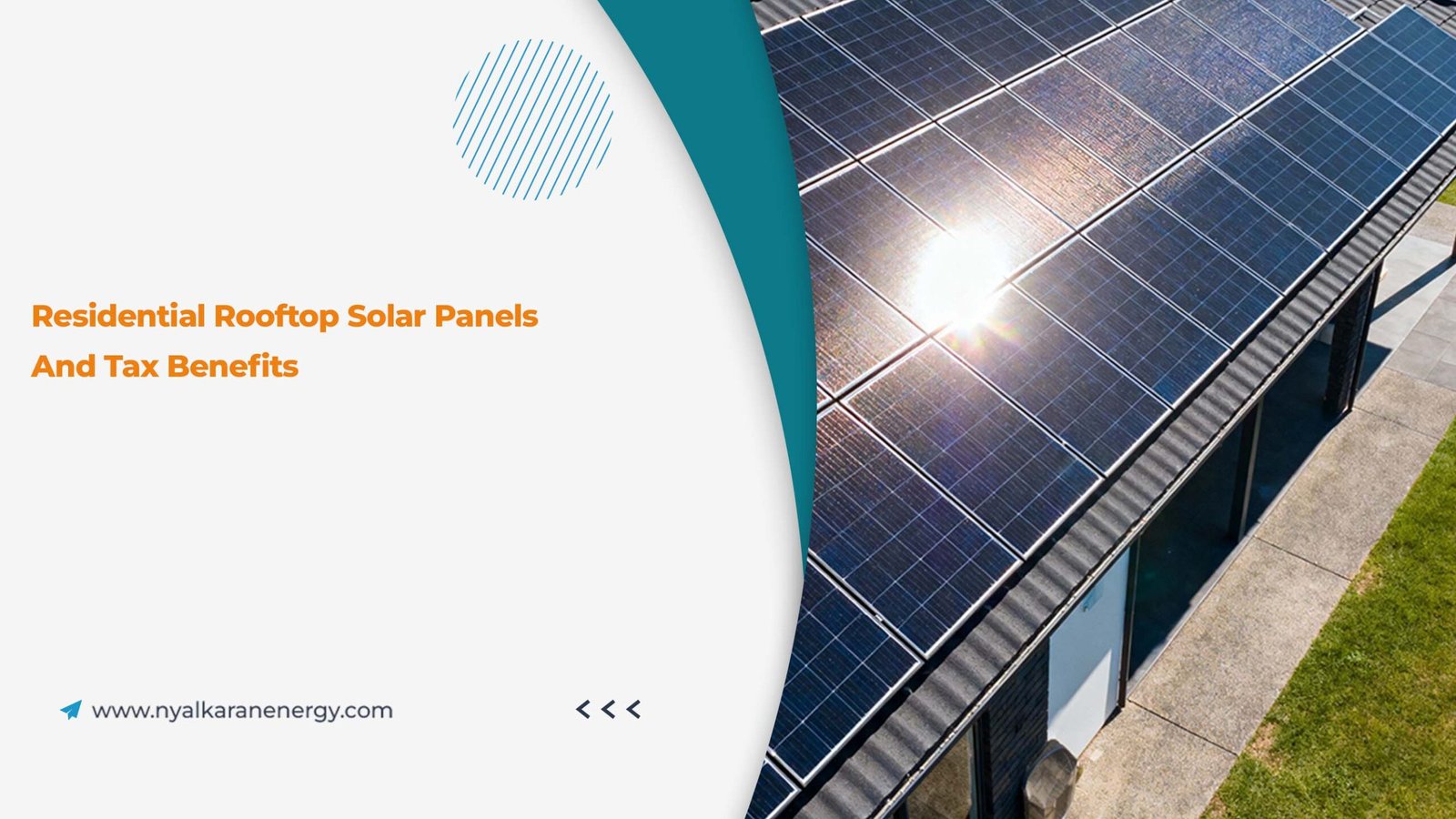
In today’s world, managing electricity bills has become a real challenge for residential homeowners. Even after reducing daily power usage, monthly bills often remain surprisingly high. This is where residential rooftop solar panels emerge as a smart and future-ready investment. By generating clean energy at home, homeowners can significantly cut electricity costs while enjoying long-term financial savings.
Beyond lower power bills, residential rooftop solar systems also offer attractive government incentives and tax benefits for both urban and rural households. These benefits make solar adoption even more affordable and rewarding.
In this blog, let’s explore how installing rooftop solar panels can deliver strong economic value and financial advantages for residential homes.
Demand For Rooftop Solar Panels In 2026
As the cost of goods and utility bills is rising continuously, residential homeowners are increasing their demand for a sustainable solution. That’s when people are beginning to adopt residential rooftop solar panel manufacturers.
The sunny Indian climate fits rooftop solar perfectly, and over the years, millions of households across India have adopted rooftop solar systems over the years. A single 3 kW system generates 3,500-4,000 units yearly and saves ₹18,000-25,000 annually on electricity expenses. Over 25 years, homeowners can save ₹5-6 lakhs minimum under minimal maintenance.
By installing the panels, homeowners not only gain energy but also reduce their dependency on the grid supply during peak hours. Residential rooftop soft panel manufacturers analyse the space and mount the panels accurately on the rooftop to avoid shading or unevenness.
With reliable solar panels, they may store and net meter the excess power, feed it back to utilities, and earn additional credits. Solar panels mounted properly attract and increase their value in the real estate market. The buyer demand for the solar panel house is over normal residential, as it appeals as a green home to eco-conscious buyers.
Central Financial Assistance
In India, the Ministry of New and Renewable Energy (MNRE) provides up to a 40% subsidy on the benchmark cost. Under the Rooftop Solar Programme Phase II, the government provides incentives for systems up to 3 kW. Higher subsidy support is available for residential systems in the special category and the northeastern states.
When a resident applies through the national portals for a rooftop solar solution, it suggests MNRE-approved vendors for the reliable installation. Homeowners can choose DISCOM-approved residential rooftop solar manufacturers to claim the government incentives.
The funds would be directly transferred via Direct Benefits Transfer to the resident’s account after vendor installation and inspection. A 3kW system costs ₹1.5 lakhs generally, but with the tax breaks and government aid, the cost drops to ₹90,000-1.3 lakhs.
The financial assistance varies according to the state. For example, the Gujarat government offers extra incentives for solar residential homes, while the Uttar Pradesh government ties subsidies to net metering. This straightforward approach aids payback periods of 3-5 years and offers quicker savings time without any support.
GST Tax Reduction
The Indian government has imposed a GST tax on every product. However, in favour of renewable energy, the government has reduced the GST taxes on solar panels. The tax on solar panel modules and systems fell to 5-12% in 2025, drastically decreasing costs by 7-10%. A 2-3 kW setup now runs ₹108,000-125,000, down ₹8,000-12,000 from prior rates for the photovoltaic panels, inverters and structural needs.
For supply and installation contracts, 12% of GST hits 70% of the value and 18% the rest. With the 5% on equipment, the overall cost drops by ₹10,000 with subsidies. Due to these subsidies, even businesses and factories are demanding solar panels for installation. As the GST is lowered, it shortens the ROI, which makes solar a viable resource for middle-class families facing 8-10% tariff hikes.
Income Tax Deduction
Homeowners can avail solar installation loans from banks and NBFCs at preferential interest rates. The principal repayment is deducted up to ₹1.5 lakhs yearly. Interest benefits depend on the loan structure and are not specifically covered under Section 24(b) for solar installations. Banks like IDFC and Tata Power offer green loans at 8-10% with discounted processing fees for residential rooftop solar.
Net metering benefits are usually adjusted against electricity bills rather than treated as taxable income. Accelerated depreciation benefits apply to commercial and industrial solar installations, not residential systems. According to section 80-IA, the homes received a 100% tax holiday on power generators for 10 years.
Net Metering For Extra Profit
Beyond the usage, the residential house can export surplus generated power for net metering and gain an additional income. Most state governments support net metering through state-specific solar policies. The excess solar power feeds the grid and allows you to earn credits against the bills.
As bidirectional meters track automatically, no upfront tax is applied for their net metering income, and homeowners can achieve their investment paybacks within a few years. In 2026, more DISCOMs will accelerate approval for residential solar projects under the National policy, which boosts the ROI and offers quicker payback periods.
Eligibility
The residential homeowners with valid electricity connections are qualified to apply for CFA. Before applying for the PM Surya Ghar Scheme, ensure the rooftop space has 10-15 sqm/kW and ideally faces in a southern direction. With all the site verification, the homeowner can find residential rooftop solar manufacturers to execute their plan.
Step For Application
Step 1: Access the official national portal and register your home.
Step 2: Select the chosen manufacturer and choose the installation timelines.
Step 3: Wait for DISCOM inspection and subsidy release in 30 days.
Step 4: Apply for loans in the banks offering green energy loans and supportive banks for 7-9% interest for tax perks.
Step 5: Use a reliable calculator to estimate the amount, installation, and post-installation paybacks.
Step 6: Monitor the real-time power generation tracking through the apps for outputs.
Final Takeaway
Installing solar panels on a residential rooftop not only saves on your electricity bills but also boosts your savings with ROI. Homeowners can choose a reputable provider like Nyalkaran Energy to deliver reliable photovoltaic cells and inverters to generate and store power for daily usage.
With available tax benefits, easy loan options, and net metering advantages, switching to rooftop solar becomes a smooth and financially rewarding decision. Nyalkaran Energy also provides detailed site analysis and customised solar panel installations, ensuring maximum energy output and profit from every rooftop.
Contact Nyalkaran Energy today and turn your rooftop into a long-term financial asset that pays returns for decades.