
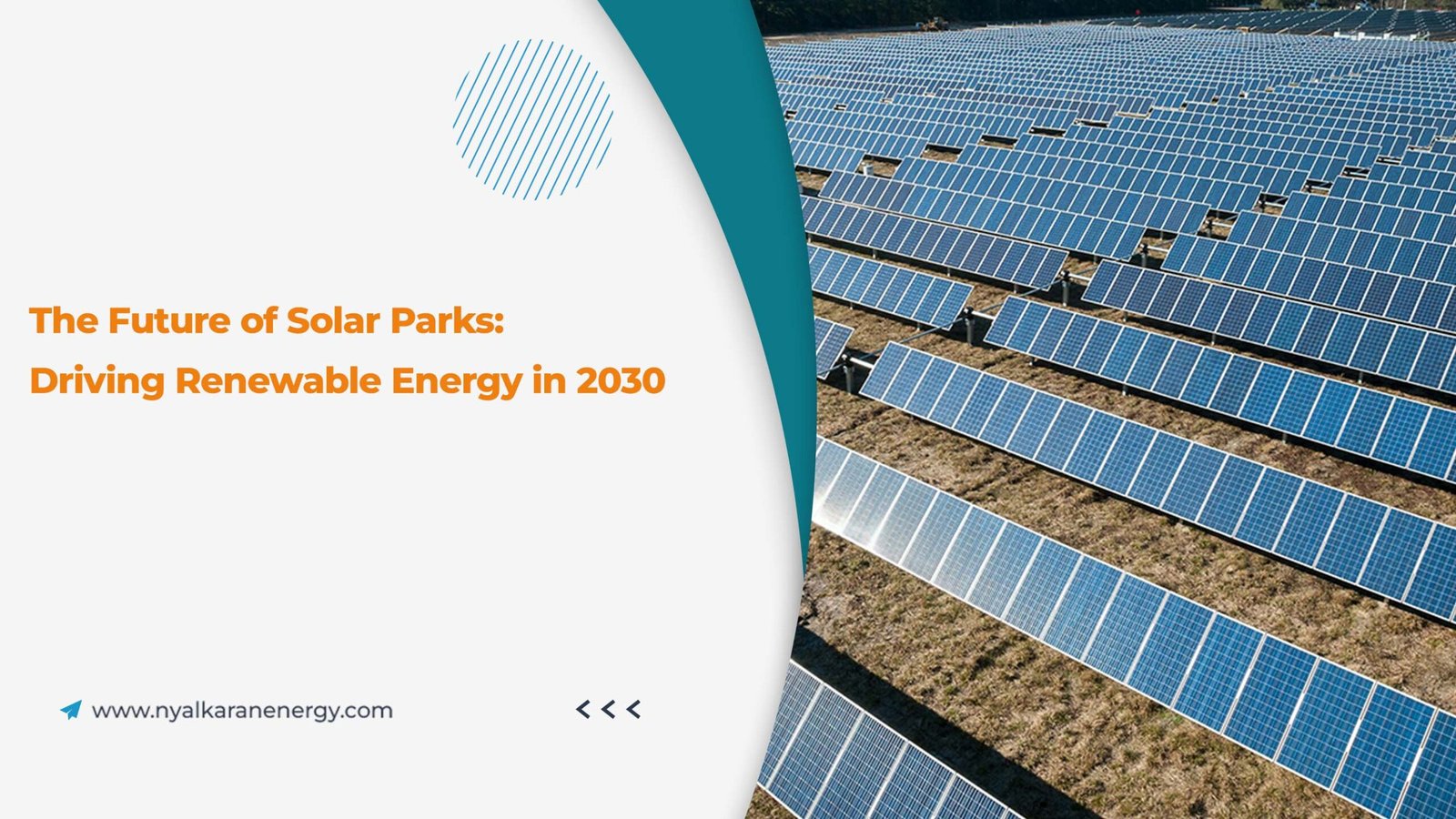
As the world moves towards a cleaner and greener tomorrow, solar energy is something that propels the way. Contracting at a rapid pace is the generation of electricity from solar parks or small panels atop rooftops. Amongst such technologies, solar park development has perhaps been one of the most viable avenues for meeting the power needs of the world and lowering carbon emissions.
By 2030, solar power will be the major one in renewable energy generation, revolutionizing industries, economies, and societies everywhere.
What Is It That Makes Solar Parks Important
Solar parks are huge open fields covered with thousands of photovoltaic panels that directly convert sunlight into electricity. They have to supply a consistent amount of energy at reduced prices and reduce the use of fossil fuels so that nations can achieve climate goals.
The term solar farms stands for development in India. They are not only producing green energy but also creating jobs, inducing foreign direct investment, and building upon local infrastructure. Solar Park development will only grow more protracted and aggressive with the increased investment of governments and private companies in solar energy.
Technology Shaping the Future of Solar Parks
Competition in solar park development is being driven by innovation. Enhanced panel efficiency, energy storage, and digital monitoring are energizing solar systems to be stronger and more efficient than ever before.
-
High-Efficiency Panels
There are newer panels that are capturing even on dark days, more sunlight and delivering more power per square meter. Solar parks thus can generate more output without taking up more land space, and thus they prove to be economical.
-
Energy Storage Solutions
Solar parks are made to store energy during the day through the usage of battery technology for nighttime supply, thus ensuring round-the-clock reliability. With higher storage capacity, the power supply remains steady even in the event of cloudy days or peak-load time.
-
AI and IoT Integration
Smart technologies are being used for monitoring energy generation, forecasting faults, and optimizing maintenance efficiency. The intelligent systems reduce downtimes and extend the lifespan of the solar facilities.
Solar farms in 2030 will be fully automated systems whose performance and climatic conditions are monitored in real-time by artificial intelligence to maximize energy output with negligible human intervention.
Government Policies and International Support
It would not have been possible without strong policy support. Governments worldwide, including India, are providing tax credits, subsidies, and facilitation of procedures for land acquisition to encourage the utilization of solar.
The Indian government’s National Solar Mission is a program to put hundreds of gigawatt solar capacity in place by 2030. The project has set the pace for quick Solar Park development in Rajasthan, Gujarat, and Karnataka states. These states are blessed with the benefits of abundant solar exposure, large land masses, and forward-thinking policies, rendering them attractive and lucrative to invest in solar.
Economic Growth and Employment Opportunities
In addition to renewable energy, solar parks are also economically beneficial. The development of Solar Farms stimulates the expansion of manufacturing, installation, maintenance, and research jobs. To local communities, it guarantees local employment while stimulating small businesses that provide inputs and services.
It is estimated to have several direct and indirect jobs per installed megawatt, from engineers to electricians, to transport and logistics personnel. With increasing solar capacity, sustainable economic expansion can also be achieved.
Environmental Benefits and Sustainability
One of the largest advantages of solar parks is their ability to reduce greenhouse emissions. For every kilowatt-hour of energy generated from the sun, a kilowatt-hour of electricity from coal or gas is pushed out, preventing tons of carbon dioxide from entering the atmosphere.
Solar power also saves water, a resource greatly consumed in conventional electricity production. Furthermore, environmentally friendly development of solar farms allows them to coexist with nature by having green buffers and providing biodiversity around the plant.
Utility-scale solar facilities will be a primary facilitator for nations’ net-zero goals by 2030, leaving a cleaner world for generations to come.
Challenges Facing Solar Parks
Although there are advantages, there are also challenges. The key challenges are land availability, transmission networks, and energy storage capacity.
Finding land for solar parks is very difficult, particularly in populated areas. Furthermore, the energy of remote locations must be transmitted to cities in an efficient manner, for which proper grid systems are necessary.
Storage technology is evolving very rapidly, but the solution at scale is expensive. More innovation and investment would be needed to overcome these barriers and drive solar as the leading global energy source.
Investment and Future Outlook
Solar parks are the most profitable ventures in the renewable energy industry for investors and entrepreneurs. Clean energy demand is increasing, and solar installations have long-term stability with low maintenance costs.
Financial models such as power purchase agreements (PPAs) and public-private partnerships facilitate comfort investment for business in solar projects. With the reduction in battery prices and efficiency, Solar Farms will be all the more economical and profitable.
Solar parks must deliver much of the world’s power demand by 2030, especially in high-solar-potential developing economies.
India’s Leadership in Solar Energy
India has emerged as a world leader in solar adoption. The geography of the nation, combined with encouragement by robust policy, is conducive to solar park development. Rajasthan’s Bhadla Solar Park stands as a key example of large-scale renewable infrastructure in India.
As technology advances, India’s model can be replicated by nations to succeed, converting sunshine into the cheapest, most convenient source of energy in the world.
Final Words
The horizon for solar parks is bright and promising. As we move toward 2030, innovation, technology, and policy will keep reshaping how the world generates and harnesses energy. From economic development to climate protection, solar parks are the power drive to a sustainable world.
If you’re ready to be part of this clean energy revolution, Nyalkaran Energy is here to help. As one of India’s leading experts in solar park development, we offer complete, end-to-end solutions for planning, installation, and maintenance. Visit Nyalkaran Energy to explore how your business or community can harness the power of solar and contribute to a greener future.